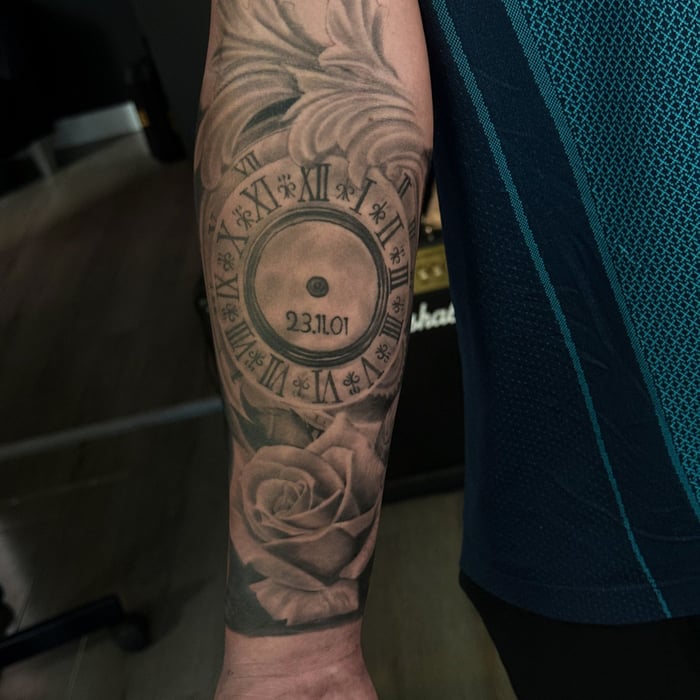
Size is not really a style choice in realism. It is the thing that decides whether the piece still reads clearly in ten years or turns into a dark smudge. I would rather have an honest conversation about scale at the start than a disappointed one further down the line.
Why detail needs room to exist
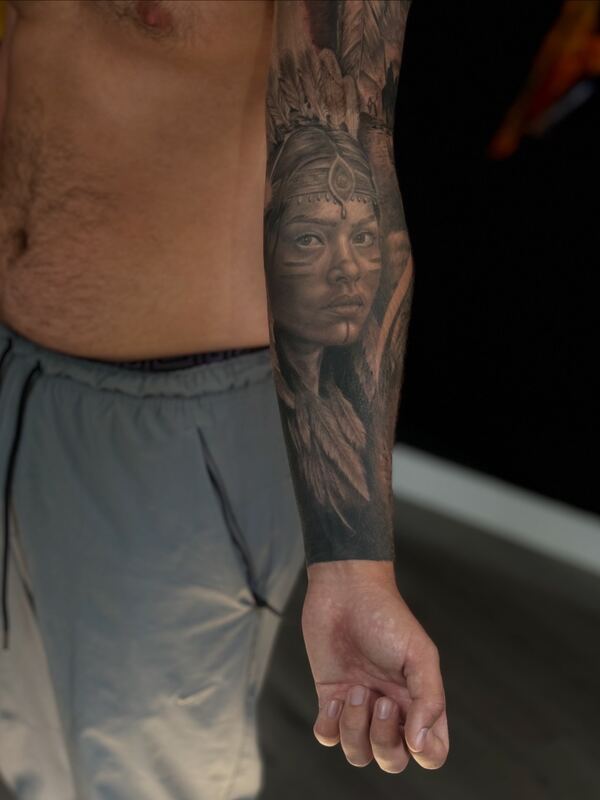
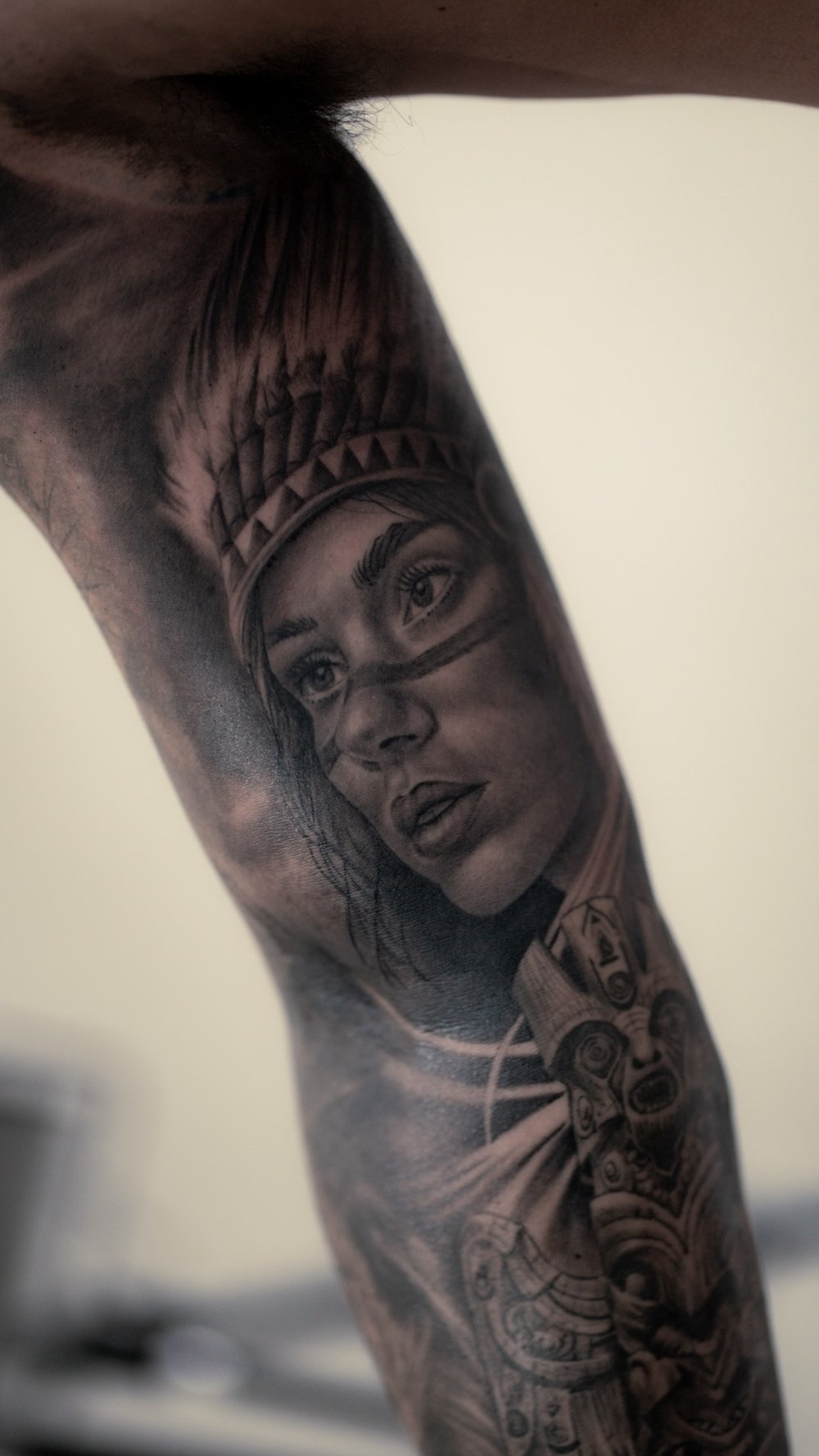
Realism lives or dies on detail. Skin texture, fur, hair strands, the fine shading around an eye, the soft transition across a cheekbone. All of that only works if each element has enough space to stay separate from the one next to it.
When a design is shrunk down to fit a small area, those elements get pushed closer together. There is less room between lines, less room between tones and the whole image has to compress to fit. It can still look sharp on the day it is finished, because fresh ink looks crisp and bold. The problem shows up later.
What actually happens to small, tightly packed realism
Ink does not stay exactly where it is placed. Over the years it settles and spreads slightly within the skin. That is normal and happens to every tattoo, not a sign of anything going wrong.
The issue with tiny, detailed realism is that there was never much of a gap between the shapes to begin with. When the ink spreads, those small gaps close up. Details that were once distinct start to merge into each other and the image softens in a way that is hard to reverse. A larger piece has more distance built into the design, so the same natural spread has far less effect on how readable it stays.
Judging size by the subject, not the body part
A lot of people think about size in terms of the area of skin they are happy to give up. A forearm panel, half a calf, a section of the shoulder. I think about it the other way round. I look at what the subject needs to read clearly first, then work out where on the body that size actually fits.
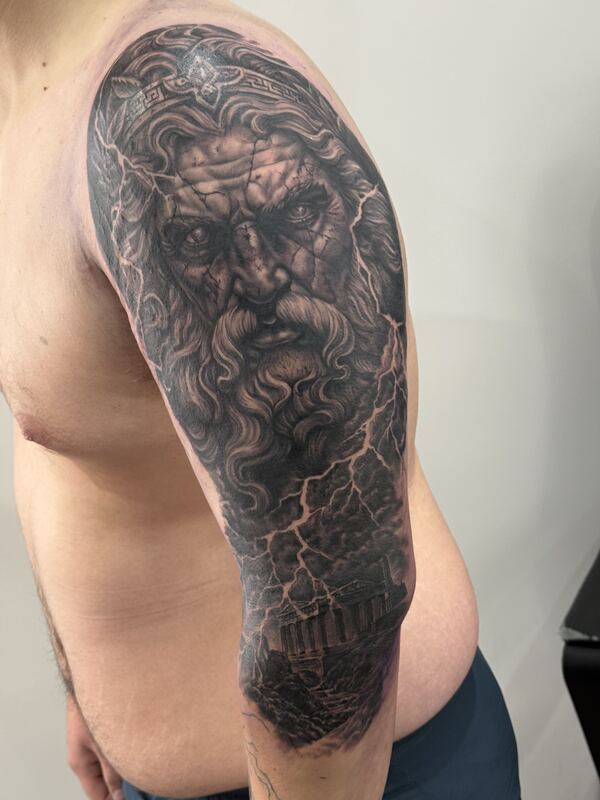
A portrait with fine facial detail needs more room than a bold symbol or a simple silhouette. A scene with more than one figure, like a mythology piece with a god and a temple behind them, needs enough space for each part to have its own weight without crowding the composition. If the honest answer is that the idea needs a full sleeve or a back piece rather than a forearm panel, I will say so in the consultation rather than forcing it smaller just to fit a smaller area.
Contrast and tone need space as much as line work does
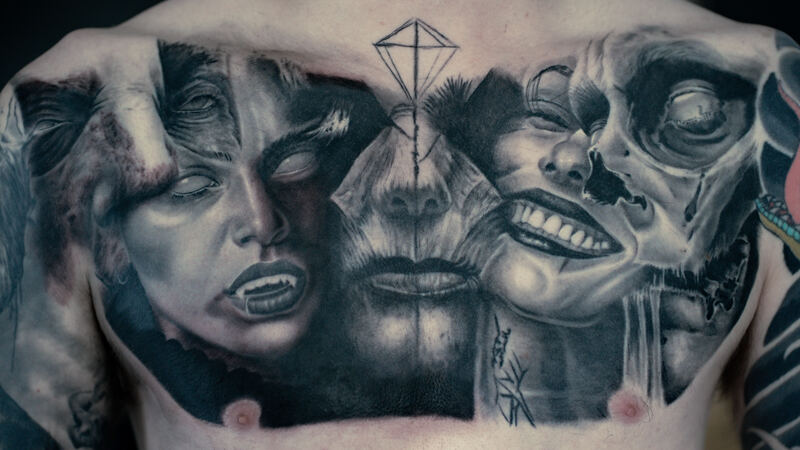
Black and grey realism depends on a full range of tone, from deep solid blacks through every shade of grey down to clean, untouched skin. That full range is what gives the piece depth and makes it read as realistic rather than flat.
A smooth grey wash gradient, the kind that moves gradually from dark to light with no obvious bands, takes space to build properly. Compress that transition into too small an area and the gradient has nowhere to breathe. The same goes for highlights. In black and grey work the brightest highlight is often just clean skin left untouched and that only works well if there is enough surrounding tone to make it stand out.
Readability from a distance still matters
A strong tattoo works at two distances. From a few steps away it should read clearly as a shape, a figure, a face. Up close, the finer detail becomes the reward for looking harder. Both of those depend on size.
If a piece is too small for its subject, the silhouette gets lost first. People squint at it trying to work out what it is, rather than recognising it instantly. Getting the scale right from the start protects both the distant read and the close up detail, which is really the whole point of choosing realism over a simpler style.
Placement and size are decided together
I never look at size in isolation. Where a tattoo sits changes how it moves with the body, how visible it is day to day and how it can be covered or shown depending on what someone needs for work or other reasons. A design built for a flat rectangle rarely looks right once it is wrapped around a curved, moving part of the body.
A large piece on the thigh, calf or back has to be laid out so it follows muscle and shape rather than fighting it. That is part of why consultations take the time they do. Placement, size and subject get worked out together rather than one after the other.
Healed work is the honest test
Fresh tattoos all look sharp. The real test of whether a piece was sized and built correctly is how it looks once it has fully healed and settled and then again further down the line. That is why I would always rather show a client healed photographs than fresh ones when we are talking through scale.
If you are weighing up a large scale piece and want to see how this plays out across full sleeves, back pieces and portrait work, my large scale page covers the kind of projects I take on in more depth and the portrait page goes into how facial detail specifically is approached.
Frequently Asked Questions
Common Questions
Not in the way it can be too small. A larger size gives detail and tone more room to stay clear as the tattoo heals and ages. The main limit is usually what fits sensibly on the body part in question and what the client is comfortable committing to.
It depends on the subject. A simple, bold portrait with less fine detail can work smaller. A realistic portrait with subtle facial detail needs enough space for the features to stay distinct once the tattoo has healed and settled over time.
It usually comes down to how much detail was packed into the space to begin with. Bolder, simpler designs with fewer tiny elements tend to hold their shape better at small sizes than dense realistic detail does.
Yes. I would rather be honest about what a design needs at the consultation stage than let someone commit to a size that will not serve the detail well once it is healed.
Generally yes, larger and more detailed pieces take more time and are usually broken into multiple sessions. I cover the general timeframes in a separate article on how long a sleeve takes to complete.
This site uses a small number of cookies. Some keep the site working properly and can't be switched off. Others help me understand how visitors use the site and are only set once you agree.
Cookie Preferences
Necessary cookies are always on because the site needs them to function. Choose whether to allow the other two categories below.
Necessary
Required for the site to work properly and can't be switched off.
Analytics
Helps me understand how visitors use the site through Google Analytics, so it can be improved over time.
Marketing
Used for Google Ads to measure and improve advertising performance.